
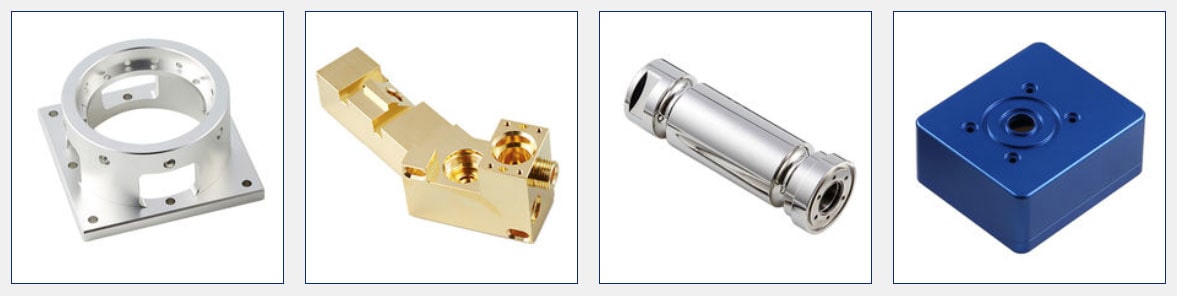
Practical, honest guidance for specifying and sourcing prototype rubber — written for the buyer, not the brochure.
Overview of Prototype Rubber Types
On prototype rubber, the buyer's interest is practical: what does this mean for cost, lead time and risk on your part? The honest answer depends on geometry and volume, not on a slogan. A capable shop states the trade-off plainly, which process reaches your features in the fewest setups, holds your true tolerances, and scales to your quantity.
Zhuohang Precision Machining Factory approaches every inquiry from that angle: 100+ CNC machines, ISO 9001:2015 · IATF 16949:2016 (product design excluded) · ISO 14001:2015, and a single engineering contact so the answer does not get lost between sales and the floor.
Material Compatibility by Type
Material is the first cost and capability decision on prototype rubber, and the one buyers most often under-spec. The table below is the short version of what a shop weighs before quoting:
| Material | Density | Yield (typ.) | Machinability | Buyer note |
|---|---|---|---|---|
| Aluminum | 2.7 g/cm³ | ~276 MPa | 85/100 | 6061-T6: the default light structural alloy; 7075-T6 nearly doubles yield for aerospace/robotics at a corrosion & cost premium. |
| Stainless | 8.0 g/cm³ | ~215 MPa | 35/100 | 304 machines with sharp, rigid setups; 316L adds moly for marine/salt; 17-4 PH reaches ~1000 MPa but moves in heat treat. |
| Titanium | 4.43 g/cm³ | ~880 MPa | 20/100 | Ti-6Al-4V: ~60% steel density at comparable strength; low conductivity traps heat — rigidity + coolant + coated tools win. |
| Brass | 8.5 g/cm³ | ~205 MPa | 100/100 | C360 free-machining benchmark; superb finish for fittings/connectors. Watch EU lead-content (RoHS/REACH). |
| Copper | 8.96 g/cm³ | ~70 MPa | 45/100 | C110 conducts but is gummy/BUE-prone; sharp positive-rake tools, lower speed. Use only when conductivity matters. |
| Inconel | 8.19 g/cm³ | ~1035 MPa | 8/100 | 718: strength-at-temperature + severe work-hardening; budget slower cycles & premium tooling — a capability signal. |
| Peek | 1.32 g/cm³ | ~100 MPa | 50/100 | Continuous ~143 °C, inert; machines like a hard plastic — sharp tools, controlled heat, no coolant cross-contamination. |
| Delrin | 1.41 g/cm³ | ~69 MPa | 90/100 | POM: stable, low-friction, holds tight tol; can warp from internal stress — gentle clamp, let stabilize before final pass. |
A few consequences that show up in your quote:
- Aluminum 6061-T6 is the default for a reason: cheap, stable, fast to cut, and ample at ±0.01 mm. Reach for 7075-T6 only when strength drives the design.
- Stainless costs more to machine (it work-hardens) and demands rigid fixturing, but 316L is non-negotiable near salt or bodily fluids.
- Titanium and Inconel are where quotes diverge most. The number is not the machine; it is tool life, coolant strategy and cycle time. A shop that quotes them cheap is probably not holding your tolerance.
- PEEK / Delrin are polymers with real engineering value (chemical, thermal, friction), not cost-cutting substitutes for metal.
Buyer takeaway: name the grade and temper in the RFQ ("6061-T6", "316L", "Ti-6Al-4V Grade 5"). "Aluminum" or "steel" is not a spec — it hands the shop a guess, and you pay for the ambiguity in scrap and rework.
Tolerance & Finish Considerations
Standard CNC work holds features to about ±0.003 mm (0.00012 in) on a capable 3- or 5-axis center, with ±0.002 mm achievable on critical features via grinding or wire EDM. General dimensions usually default to ISO 2768-f (fine) or m (medium) unless you call out tighter. Surface finish from cutting runs Ra 0.8–3.2 µm; fine finishing and grinding reach Ra 0.4 µm or better.
For production, ask for a process capability target: Cpk ≥ 1.33 in production on general characteristics and on key/safety characteristics, with Ppk ≥ 1.67 at the initial study. A supplier who cannot state a Cpk number is telling you they are not running a controlled process.
| Characteristic | Typical capability | What it costs you |
|---|---|---|
| Standard mill / turn features | ±0.003 mm | Baseline; little premium at volume |
| Critical features (grind / wire EDM) | ±0.002 mm | Extra operation + inspection |
| General dimensions (default) | ISO 2768-f / m | Free — leave unspecified unless functional |
| As-machined surface | Ra 0.8–3.2 µm | Fine for most mates |
| Finished / ground | Ra 0.4 µm or better | Needed for seals / slides |
The single most expensive habit in CNC sourcing is tightening tolerances by default. Every call-out you do not need is an inspection step and a scrap risk the shop must price in. Tighten only the surfaces that mate, seal or bear load, and leave the rest at ISO 2768.
How to Choose for Machined In China
Choosing a CNC supplier is less about who owns the newest machine and more about who controls the process. Four things separate a partner from a vendor:
- Process discipline. Do they quote Cpk targets and run SPC on key characteristics? ISO 9001:2015 · IATF 16949:2016 (product design excluded) · ISO 14001:2015 is the floor, not the ceiling.
- Engineering back-and-forth. A good shop flags a risky tolerance or a warping wall before cutting, not after.
- Materials integrity. Can they show mill certs and keep heat-lot traceability? Critical for medical, auto and aerospace.
- Communication. One accountable contact beats a ticket queue. For Zhuohang Precision Machining Factory that is Felipe Iglesias ([email protected]).
Ask for 2–3 references in your industry and a sample of how they report first-article inspection. The answer tells you more than any brochure. A shop that sends a measured FAI report with actual numbers is showing you the process is controlled.
RFQ Data We Need
A clean RFQ is the cheapest insurance in CNC sourcing. Send:
- The 3D model (STEP/IGES) and a 2D drawing with dimensions and tolerances called out — the model alone is not a spec.
- Material grade and temper, plus any cert requirement (EN 10204 3.1, RoHS, REACH).
- The three tightest tolerances and any GD&T call-outs that drive function.
- Surface finish, coating or anodizing, and which faces those apply to.
- Quantity, target date, and whether first-article inspection / PPAP is required.
Common drawing traps that cost you money:
- Internal corners cannot be sharp — an end mill leaves a radius. Call out a fillet (≥ 0.5 mm) instead of a square corner.
- Hole depth should stay near or below 4× the diameter for twist drilling; deeper holes need gun drills and longer lead times.
- Walls thinner than ~0.5–1.0 mm chatter and distort. Thicker is cheaper and more stable.
- Standard threads under ~M2 / #2 are fragile in soft metals — avoid unless the assembly demands them.
- Tight tolerances cost money on every feature. Tighten only the surfaces that mate or seal; leave the rest at ISO 2768.
- Heat-treated parts move. If flatness matters post-hardening, plan a finish-grind operation and say so in the RFQ.
Zhuohang Precision Machining Factory reviews drawings for manufacturability before quoting — if a tolerance is needlessly tight or a corner impossible to cut, you will hear about it up front, not at rejection.
How to decide: a practical framework for prototype rubber
When the spec sheet is ambiguous, fall back to this four-step loop. It is how a disciplined shop quotes, and how you should evaluate the quote:
- Function first. List what the part must do — align, seal, bear load, dissipate heat. Every tolerance ties to one of these or it is optional.
- Pick the simplest process that holds true tolerance. 3-axis before 4-axis before 5-axis; turn before mill-turn; machining before EDM. Each step up is a cost you must justify on the drawing.
- Name the material by grade, not family. '6061-T6' not 'aluminum'; '316L' not 'stainless'. The grade sets machinability, certs and price.
- Demand evidence of control. Cpk targets, FAI reports, mill certs. If the shop cannot produce them, the low price is borrowing against your shipment.
Run this loop before you ask for a quote and you will write a better RFQ, get a tighter number, and bore the right supplier.
An illustrative scenario
To make the trade-offs concrete, consider a representative part — a 200 × 150 × 20 mm aluminum bracket with six M5 bosses on one face and two precision slots on an adjacent face, called out at ±0.05 mm. The thinking is generic and mechanism-based; it is not a specific customer job:
- A 3-axis center machines the top face and bosses in one setup. The two slots on the side need a second setup — acceptable at ±0.05 mm, because the re-clamp error stays well inside the tolerance budget.
- If those slots were called out at ±0.005 mm, the re-clamp alone would risk the number. That is the moment a 4- or 5-axis single-setup cut earns its premium, not because the machine is 'better', but because it removes the error source.
- Material is 6061-T6, so no special tooling or coolant strategy is needed; cycle time is dominated by the pocket milling, not the drilling.
The lesson: tolerance drives process choice, not the other way round. Write the loosest tolerance that still functions and you usually get the cheapest capable process for free.
A ready-to-send RFQ snippet for prototype rubber
Copy this into your inquiry and fill the brackets. A complete RFQ is the difference between a real quote in 24 hours and a guess in a week:
Subject: RFQ — prototype rubber

1. Part: [name]  |  Qty: [prototype / N pcs]
2. Model: [STEP/IGES attached]  +  2D drawing with dims & tolerances
3. Material: [grade+temper, e.g. 6061-T6]  |  Certs: [EN 10204 3.1 / RoHS / none]
4. Critical tol: [3 tightest, e.g. ±0.005 mm slots]  |  GD&T: [list]
5. Finish: [Ra, anodize/plating, faces]
6. Target date: [ ]  |  FAI/PPAP: [required / not]

Send to Felipe Iglesias — [email protected]
Suppliers quote the drawing, not the keyword. The more precise the brief, the less the shop charges to de-risk it.
When you do NOT need the premium option: if your part is a simple bracket at ISO 2768 tolerances in aluminum, a 3-axis center beats 5-axis on cost with zero downside. Buying axes you cannot use is the easiest way to inflate a quote. A supplier who recommends the simpler path for your part is the one to trust.
Frequently Asked Questions
What should I send to get an accurate quote for prototype rubber?
Send the STEP model and a 2D drawing with dimensions and tolerances, the exact material grade and any cert requirement, your three tightest tolerances, surface finish, quantity and target date. Clean inputs are the fastest path to a real number — Zhuohang Precision Machining Factory quotes from the drawing, not a guess.
How do I know a supplier can hold my tolerances?
Ask for a Cpk target (Cpk ≥ 1.33 general characteristics · ≥ 1.33 key characteristics in production; Ppk ≥ 1.67 at launch) and sample first-article inspection reports. A shop that states capability numbers is running a controlled process; one that will not is a risk on every critical dimension.
When is prototype rubber the wrong choice?
When a simpler process holds your true tolerances in fewer setups. Specifying beyond the requirement is the most common way to overpay — a good shop tells you before cutting, not after.
Ready to move from estimate to part? Send your drawing to Felipe Iglesias at [email protected] or reach +86 131 2653 6955. See the buyer's resource center at /resources.html for RFQ checklists, tolerance guides and material quick-reference — built to save you a wrong turn before you cut metal.