
Machined In China Factory
IP protection is one of the risks buyers worry about most when machining in China, so it deserves a concrete answer rather than a reassurance. The factory's practice is specific: sensitive paper documents are kept in access-controlled, locked storage, and digital files are stored on encrypted drives, with disposal handled according to documented best practice.
It also operates under a code of conduct that covers confidentiality, data protection, and IP, and it expects to sign an NDA before production data moves. None of this makes leakage impossible — no measure does, anywhere — but it makes leakage a process failure with a paper trail, rather than an unmanaged risk. When you ask a shop how it stores your drawings and it can answer in this kind of detail, you have found one that treats your IP as a liability it owns.
What do the certifications and their scopes cover?
Certifications are your cheapest pre-audit, but only when the number is verifiable and the scope is honest. This factory holds three, all issued by URS (United Registrar of Systems), all checkable.
| Standard | Certificate number | Scope |
|---|---|---|
| ISO 9001:2015 | 116024/A/0001/UK/En | Machining of metal parts |
| IATF 16949:2016 | 131941/A/0001/SM/En | Manufacture of CNC metal machining parts (excludes product design, Clause 8.3) |
| ISO 14001:2015 | 116024/B/0001/UK/En | Environmental management related to machining of metal parts |
Note the IATF scope: it excludes product design under Clause 8.3. That is the accurate description of a build-to-print manufacturer, stated rather than hidden. A supplier that states its scope this plainly is the one you want to audit — honesty about limits is the strongest signal of how it will handle everything else.
When you check a certificate, do not stop at the name — verify the number with the registrar, and read the scope line against what you are buying. A certificate for "machining of metal parts" does not cover plating or heat treatment; a certificate that excludes design does not make the shop your designer. The scope is the fine print that decides whether the certificate actually covers your order, and a shop that states it plainly has already done the hard part for you.
What are the labor and environmental practices?
Supply-chain risk in 2026 is not only about parts — it is also about the conditions under which they are made, because a labor or environmental problem at your supplier is a reputational problem for you. You should ask, and a serious factory should be able to answer, without hesitation.
The labor policy here is concrete: employees sign labor contracts on joining, receive social insurance, and work within legal hour limits with at least one rest day per week and legally compensated overtime, under a stated policy against forced and child labor. On the environmental side, the roof carries solar panels generating roughly 20,000 kWh per month, and there are documented noise, waste-water, and air-pollution control procedures.
What industries and materials do the machined parts serve?
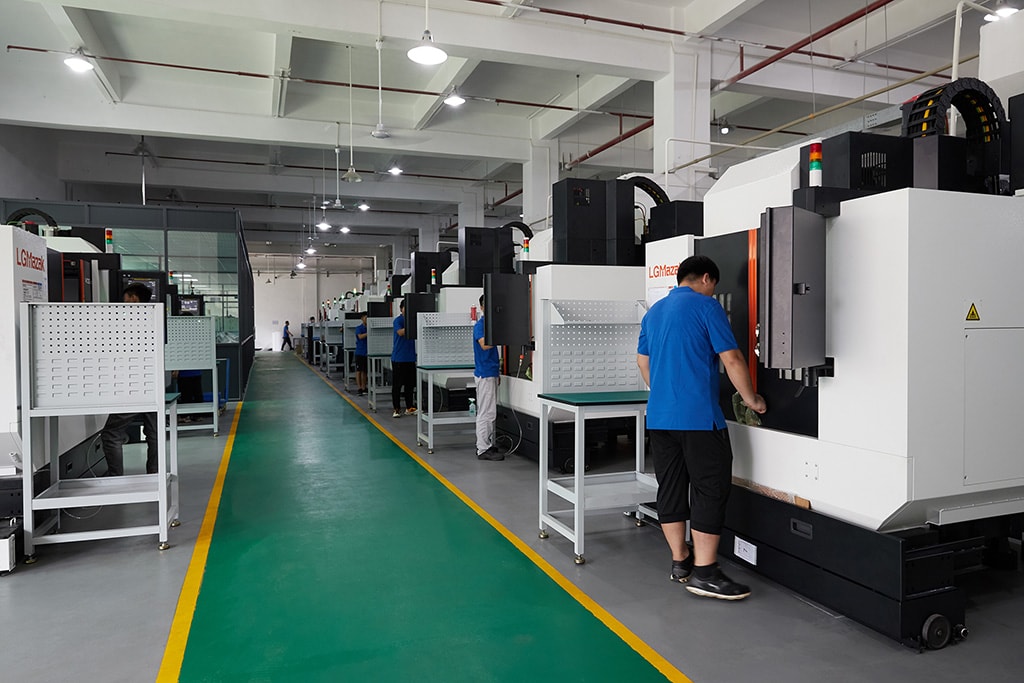
The factory's output spans the industries that drive demand for precision machined parts: automotive, robotics, electronics, medical, and automation machinery and equipment. That spread matters to a buyer for a quiet reason — a shop that machines across these sectors has already been pushed to hold tighter tolerances and cleaner documentation than one serving a single commodity market, because each industry audits its suppliers differently.
The material range follows the same logic. The shop machines aluminum, stainless steel, carbon and alloy steel, brass, copper, titanium, magnesium, and engineering plastics, with incoming lots XRF-checked against their mill certificates. Surface finishing covers standard and hard anodizing, zinc / nickel / silver / gold / chrome plating, brushing, mirror polishing, powder coating, and painting, and heat treatment covers vacuum, bright, carburizing, nitriding, and stress-relief aging. The point for you is not the length of the list — it is that the range exists behind one accountable supplier rather than scattered across subcontractors you cannot see.
How do you verify a factory's claims without flying there?
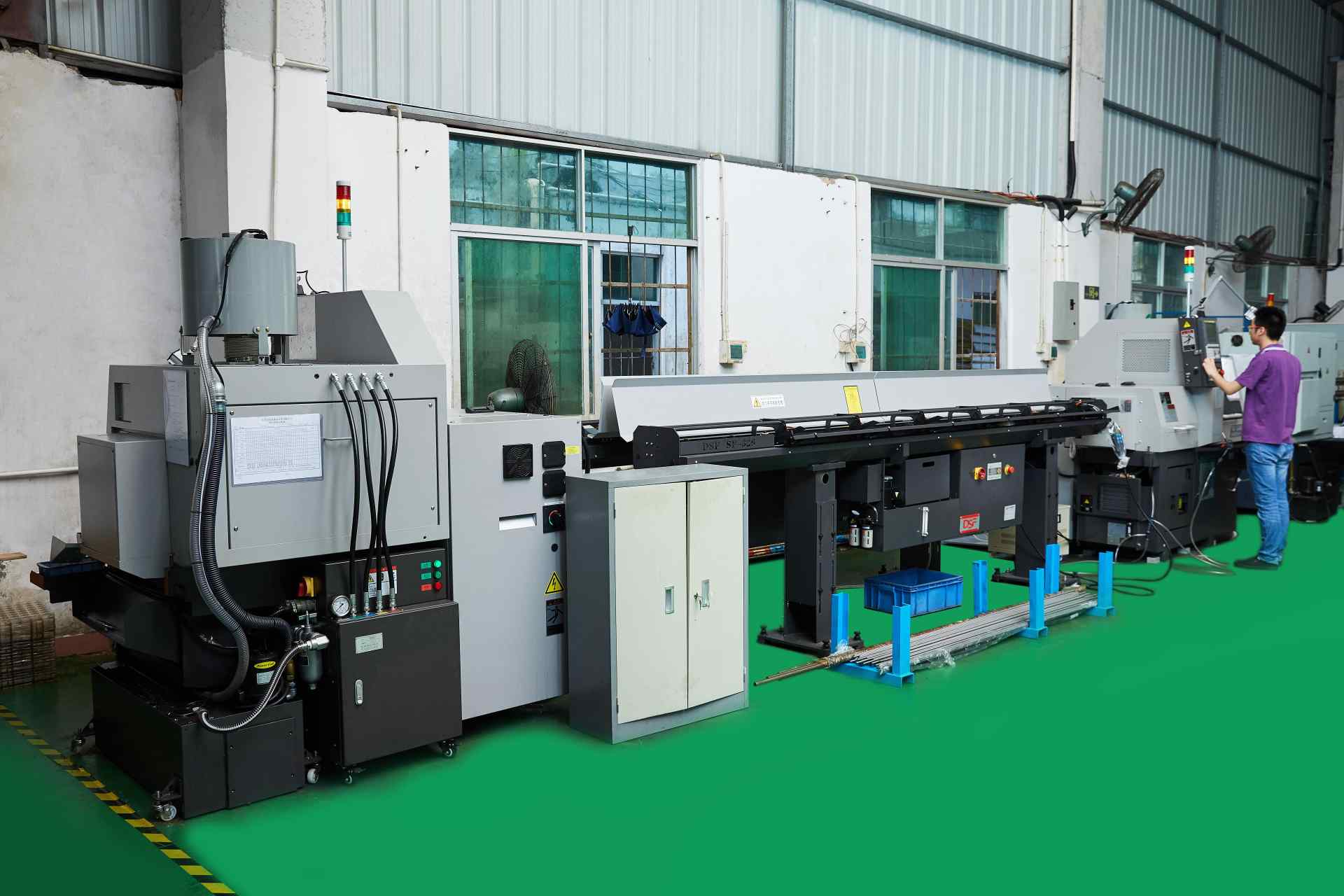
Every number on this page — the machine count, the certificates, the floor area, the traceability system — is a claim until you check it. The good news is that none of the checks requires a plane ticket. Four remote moves cover most of what a site visit would tell you, and they can all happen on a first contact.
- Live video walk-through. Ask to see the floor and the inspection room in real time, not a recorded tour. A real factory opens the camera and walks; a fake one reschedules.
- The machine list with counts. Models and quantities by process, stated without hesitation, describe an owned floor. A brochure describes a Rolodex.
- Certificate numbers to the registrar. ISO and IATF certificates have numbers you can verify independently. A logo is decoration; a number is an audit.
- A current-job report. A CMM report or SPC chart from something running now, tied to a real drawing, proves the inspection room is alive.
Run all four and the factory stops being a set of claims and becomes a set of facts, which is exactly what the case study on this page is meant to show you how to do.
What are the honest limits of this factory?
A case study is only useful if it is honest about where it ends. This factory's limits are stated plainly, and they are the same kind of limits any real shop has. It does not own product design — the IATF scope excludes it under Clause 8.3. It does not run high-temperature titanium stress relief in-house — the ovens reach 500 °C, so Ti-6Al-4V aging goes to a qualified partner. Its envelope is finite — milling tops out around 1300 × 700 × 600 mm and turning around Ø720 × 1280 mm. And it is one shop, not a network — it cannot be your only source and your backup at the same time.
None of these limits is a defect; they are the truth of a build-to-print manufacturer. The factory that states its limits is giving you the information you need to scope the order correctly. The factory that claims to do everything is asking you to find its limits the hard way, after the order is placed. Read the limits as part of the evidence, not a mark against it.
What this shop actually runs
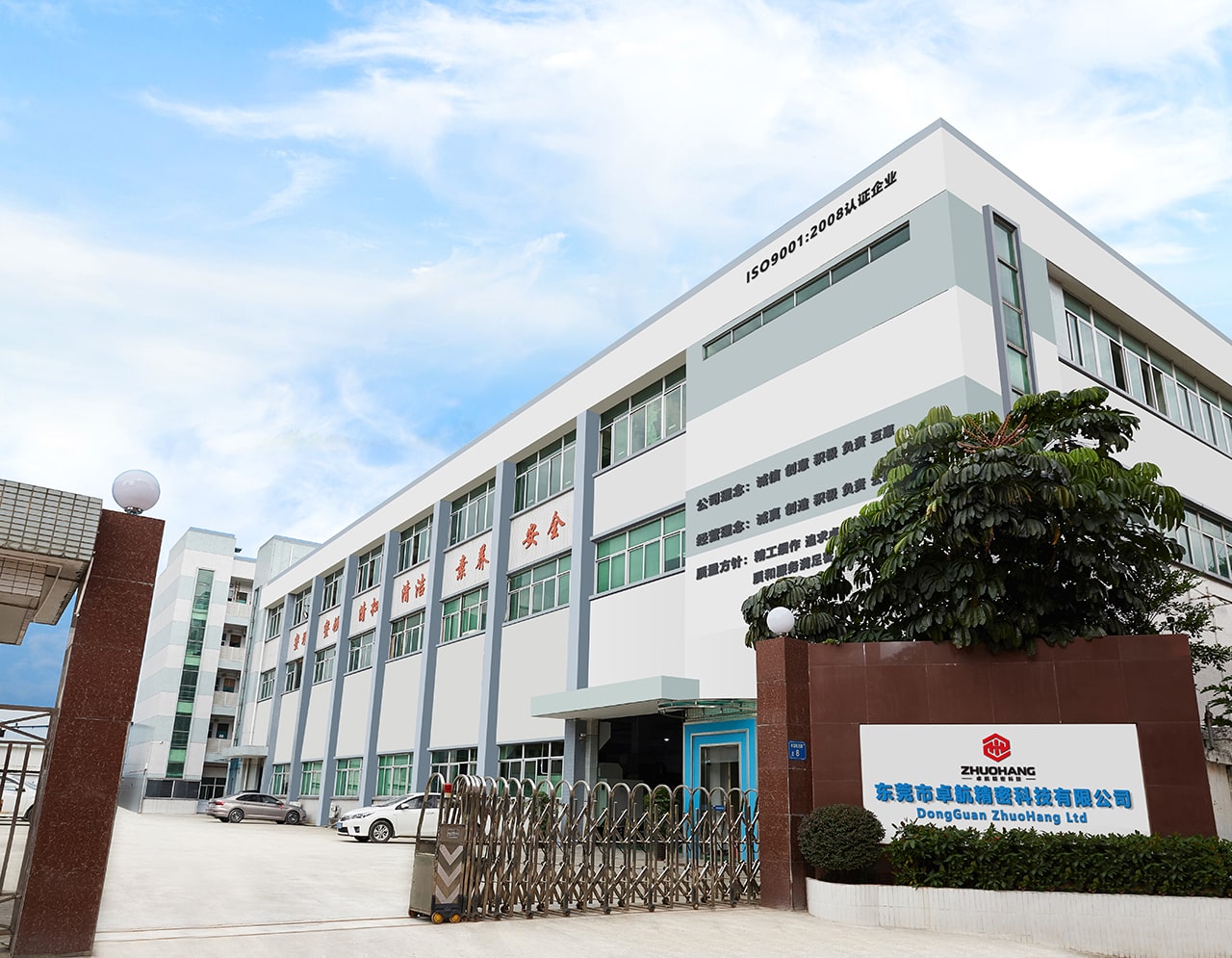
Capability evidence should come as specifics, not slogans. Behind this guide is a 6,800 m2 plant in Dongguan, China running 100+ CNC machines with 100+ staff. The machine list by category:
- 5-axis machining centres (10+) - Mazak VARIAXIS I-600 (510/910/510 mm travel, 12,000 rpm, 22 kW, 71.6 N·m, 30-tool BT40) and Mazak INTEGREX I-250H S (B-axis 0.0001°, 24 kW, 124 N·m, 38-tool HSK-A63). Used on compound-angle parts, single-setup multi-face prismatic work, and aerospace fittings where datum transfer loss is unacceptable.
- 3-axis / 4-axis machining centres (50+) - Brother SPEEDIO S500Z2N / S700Z2N (10,000 rpm, 14/21-tool ATC, 0.7 s tool-to-tool, Z-axis 2.2 G) and Mazak VCE-430A L / VCE-570C L (10,000 rpm, 118 N·m, 24-tool ATC). Used on prismatic parts, plates, brackets, housings.
- Swiss-type turning centres (10+) - Citizen Cincom A20-3F7 (Φ20 mm, 10,000 rpm), TSUGAMI B0206-III / B0205-III (Φ20 mm, 0.1 µm), STAR SR-32JII / SR-32J Type N (Φ32 mm, 8,000 rpm). Used on long, slender rotational parts at ±0.002 mm.
- CNC turning centres (20+) - HEADMAN T70M/1250 (720 mm swing, 117 mm bore, 3,000 rpm, BMT75 12-station turret). Used on shafts, bushings, flanges up to ±0.002 mm.
- Wire EDM (5+) - Sodick AQ535L (550/350/300 mm travel, ±20° taper, 800 kg workpiece). Used on hardened tool steel, internal splines, sharp internal corners that milling cannot reach.
- Inspection: Hexagon CMM + 20+ gauges - Hexagon CMM for coordinate measurement, plus vision system, profilometer, hardness tester, coating thickness gauge, XRF for material verification. The 10:1 rule (gauge 10x more accurate than the band) is applied to every feature.
- Machine highlights - VARIAXIS I-600: one-setup multi-face 5-axis + MAZA-CHECK auto-calibration; INTEGREX I-250H S: DONE-IN-ONE mill-turn, B-axis 0.0001° + Ai thermal shield; SPEEDIO S500Z2N / S700Z2N: Z-axis 2.2 G + 0.7 s ATC; Swiss-type: guide-bush switchable + 0.1 µm resolution.
Tolerance: ±0.003 mm CNC milling / ±0.002 mm CNC turning / ±0.002 mm grinding and wire EDM. Capability: Ppk >= 1.67 initial on key characteristics, Cpk >= 1.33 ongoing.
Certificates: ISO 9001:2015 (116024/A/0001/UK/En), IATF 16949:2016 (131941/A/0001/SM/En, with design clause 8.3 excluded, stated openly) and ISO 14001:2015 (116024/B/0001/UK/En), issued to Dongguan Zhuohang Ltd, registration 91441900MA4UWT6X39, founded 2005.
Where we ship: Austria, Belgium, the Czech Republic, Denmark, France, Germany, Greece, Hungary, Ireland, Italy, the Netherlands, Spain, Sweden and the United Kingdom in Europe; Brazil, Canada, Mexico and the United States in the Americas; China, Israel, Japan, Singapore and Sri Lanka in Asia; Australia and New Zealand in Oceania; and South Africa in Africa — plus other countries and regions worldwide, shipped from our base in Dongguan, China.
Contact: Felipe Iglesias, [email protected], +86 13126536955.
Verify this factory the same way you would any supplier
Email [email protected] or call +86 13126536955 to request the machine list, certificate numbers, and a video walk-through.
Frequently Asked Questions
What does this machining factory actually look like on paper?
In short, It is Zhuohang Precision Machining Factory, the legal entity Dongguan Zhuohang Ltd, founded in 2005 and located at No. 8, Shuibian Songyuan Road, Hengli Town, Dongguan, Guangdong, China 523470.
Which machines and inspection gear are on the floor?
In short, More than 80 production machines — 50+ three-axis, 20+ four-axis, and 20+ five-axis milling centers, 25+ lathes, and 7+ grinders — plus 20+ inspection instruments including Hexagon CMMs, a gear measuring center, vision machines, a laser microscope, and an XRF material analyzer.
How does traceability work when parts cross an ocean?
In short, An integrated MES/ERP system records the full chain on every lot: raw material source and usage, process parameters, machine data, production batch, machining time, operator, and inspection results. If a non-conformance surfaces, the shop can isolate exactly which lot, machine, and operator, not guess.
How does the factory protect a customer's intellectual property?
In short, Sensitive paper documents are kept in locked, access-controlled storage, and digital files are stored on encrypted drives. The factory also operates under a code of conduct covering confidentiality, data protection, and IP, and expects to sign an NDA before production data moves.
What do the certifications and their scopes cover?
In short, ISO 9001:2015 (No. 116024/A/0001/UK/En) covers quality management for machining metal parts; IATF 16949:2016 (No.
What are the labor and environmental practices?
In short, Employees sign labor contracts on joining, receive social insurance, and work under legal hour limits with at least one rest day per week and legally compensated overtime. The roof carries solar panels generating roughly 20,000 kWh of power per month, and there are documented noise, waste-water, and air-pollution control procedures.
How do I verify a factory's claims without flying there?
Four remote checks: a live video walk-through of the floor, the machine list with counts, certificate numbers you can verify with the registrar, and a CMM or SPC report from a current job. Run all four and the claims become facts you can hold.
What are the honest limits of this factory?
In short, It does not own product design, it outsources high-temperature titanium stress relief to a qualified partner, its machining envelope is finite, and it is one shop rather than a network. These limits are the truth of a build-to-print manufacturer — stated plainly so you can scope the order correctly.
Continue reading: Machined in China · Machined In China Services · How do I contact Machined In China?
Standards referenced on this page
- ISO 14001 — Environmental management systems — Requirements with guidance for use
- ASTM B348/B348M-21 — Standard Specification for Titanium and Titanium Alloy Bars and Billets
- IATF 16949:2016 — Automotive quality management system standard