
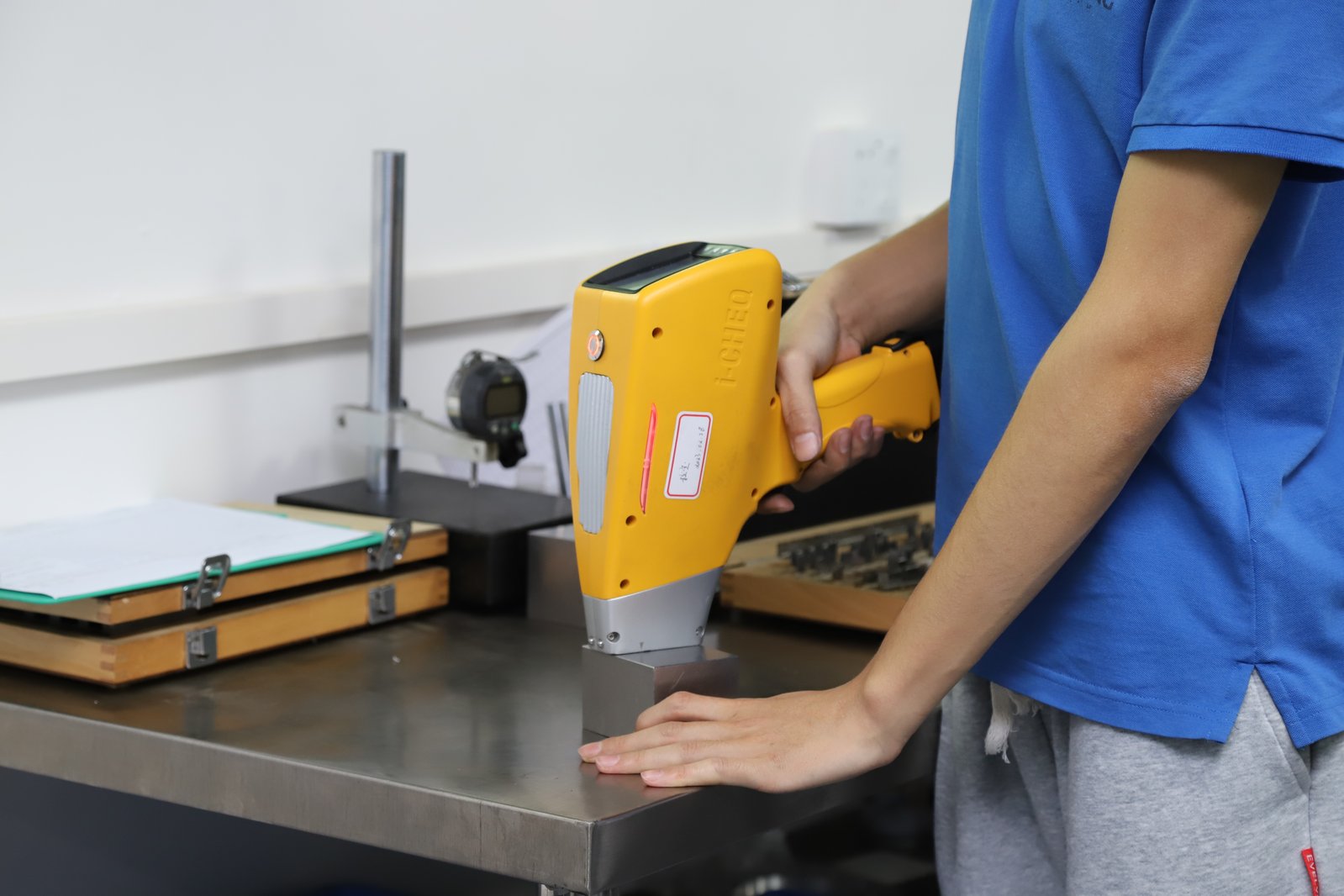
Every medical device file contains machined parts, and every machined part in it arrived with a trail of documents — the material certificate, the dimensional report, the lot record, the cleanliness evidence. Regulators and auditors read that trail years after the parts were made, and they read it looking for one property above all: consistency. The certificate heat number should match the lot record; the report should reference the drawing revision; the cleanliness evidence should match the specification. For parts made in China, that consistency is not automatic; it is engineered, specified, and verified by the buyer at each step. This guide follows the chain from quotation to record room and shows what a buyer checks at every link.
Where does the documentation chain actually begin?
The chain begins before the metal is ordered, because traceability is purchased at the front, not reconstructed at the end. The mill certificate that describes a specific heat of alloy only exists if the metal was bought with that certificate requested; the machining shop cannot invent a mill history for bar it bought without one. When the drawing names a grade and a standard, the buyer and the shop have to agree at the RFQ stage what the material evidence will be — a mill certificate, a test report with the required values, or a deeper chain to the original melt for patient-contact work.
That agreement is the first document of the order, and it should be written rather than implied. Put the material standard, the required evidence, and the acceptance rule into the quotation so the shop buys the right metal with the right paperwork from the start. A supplier that cannot confirm the material route at quoting is a supplier that will discover the gap at delivery, when the metal is already cut and the certificate options have narrowed. The front of the chain is the only place where the buyer can still choose; after the metal moves, the documentation is whatever the purchase produced.
What should the material certificate actually contain?
A material certificate is only useful if it can be tied to the metal that was machined. That means it should name the standard and condition you specified, show the heat or lot number, and match the marking on the delivered bars or plate so that incoming inspection can confirm the link. It should carry the mechanical and chemical values the standard requires, in a language your quality team can read without translation risk. A certificate that describes "stainless steel" without a heat is not a certificate for medical work; it is a description of a category.
Read it like an auditor will read it, because an auditor eventually will. Compare the certificate to the drawing's material call-out, the incoming marking to the certificate number, and the values to the standard. Where the part is patient-contact, confirm with your regulatory team how deep the chain must go — for some programs the shop's certificate is sufficient; for others the metal must trace to an approved source with audited history. The depth of the chain is a design decision made by your file, and it should be stated in the RFQ so the shop buys exactly the evidence you can use.
How does the first article fit into the file?
The first article is the document that proves the process can hold the drawing, and on medical work it carries unusual weight because it is the first formal evidence in the file. It should cover every characteristic — not a sample of them — with the measured value, the drawing value, and the instrument used for each. It should reference the exact drawing revision that was approved, because a first article measured against a superseded revision is evidence of nothing except confusion. And it should be approved in writing before the production run starts, because the run inherits the legitimacy of the sample that released it.
The buyer's job is to make the first article easy to accept or easy to reject, never easy to ignore. State the report format you expect before the order, name who approves it and within how many days, and return the decision in writing. A first article that arrives with the right format and the right revision can be approved the day it lands; one that arrives incomplete forces a round of corrections that sits in the calendar and in the file. On the quality page of this site, the inspection practice behind those reports is documented, and it is the same discipline the first article is testing.
What makes a dimensional report trustworthy for a device file?
A dimensional report earns trust the way every other document does: by being specific and traceable. It should name the drawing revision, identify the part or lot it belongs to, list each measured characteristic with its tolerance, and state which instrument produced the value — a CMM for a bore, a dedicated gauge for a thread, a roughness tester for a finish. Where the tolerance is tight enough that measurement uncertainty matters, the report should acknowledge it. A report that lists numbers without instruments or revisions is a decoration, not evidence.
For critical characteristics, ask what the report says about the process, not just the parts. A single measured value proves one part at one moment; a capability figure drawn from the run shows the process stayed centered. Where the design allows, request the capability data on your tightest features — a stable process at Ppk ≥ 1.67 initial is the difference between a batch that passed and a process that can be relied on to keep passing. The report that carries both the part measurements and the process evidence is the report that survives an audit with its credibility intact.
How do cleanliness and surface records enter the file?
Machining leaves residues that no dimensional report will ever catch: oils from the coolant, chips in a blind hole, handling marks on a surface that must be clean. For medical components, how the part was cleaned and packaged is part of how it was made, and the file should say so. When the drawing calls for controlled cleanliness or a defined surface condition, the supplier should document the cleaning method, the verification that the method worked, and the packaging that preserves the result through freight. A surface that is specified but never verified is a surface that was assumed.
Put the cleanliness expectation in the RFQ with the same formality as a tolerance. Name the cleaning requirement, the verification method, and the packaging rule, and require the evidence to ship with the parts rather than arriving in a later email. Where the finish is functional — a sealing surface, a sliding fit, a surface that must not trap debris — confirm how edges and threads are finished and checked. The file should reflect what was actually done to the surface, because the auditor who questions the part in three years will not have the machinist's memory to ask.
What should the lot record capture for the long term?
The lot record is the document that ties everything together after the parts have shipped and the people have moved on. It should link the material heat to the work order, the machine and program to the run, the inspection results to the parts, and the finished lot marking to the batch that left the building. It should be written in the language your file uses and retained for the period your quality system requires. The lot record is what makes the file reconstructable — without it, the certificate proves the metal was certified and the report proves some parts were measured, but nothing proves they were the same metal and the same parts.
Agree the lot record's contents and retention before the first production lot runs, and review the format on the pilot lot. A supplier that already keeps lot records in the format you need is a supplier whose file will assemble quickly; one that keeps its records in an internal system and promises to reconstruct them later is a risk wearing the shape of a convenience. On the parts page of this site, the kind of components these lot records follow is shown, and the record discipline is what makes them audit-ready rather than merely machined.
How do you review a supplier's documentation before committing a full program?
Documentation quality is a supplier attribute, and like every attribute it should be tested with a small order before it is trusted with a large one. Order a pilot lot of a representative part with the full document set required — certificate, first article, dimensional report, cleanliness evidence, lot record — and then check the artifacts against each other and against the specification. Does the certificate heat match the lot record? Does the report reference the approved revision? Does the packaging evidence match the drawing? The pilot converts the supplier's documentation claims into artifacts you can hold, which is the only evidence that matters.
Run the same test on the formats before the pilot, not only after. Ask for the certificate template, the report layout, and the lot record format at the quotation stage, and read them the way your auditor will. A supplier that sends its formats without hesitation is used to being scrutinized; one that promises "all documents included" without showing a format is asking you to approve an unknown. Formats are part of the specification on medical work, because your file and your auditor will read whatever the supplier produces, and what the supplier produces is decided before the first part is machined.
Which clauses make the documentation part of the order?
The documentation chain only holds if the purchase order holds it. Five clauses carry the weight. A material clause stating the standard, condition, and required certificate with the acceptance rule at receiving. A first-article clause naming the report format, the approval window, and the release rule for production. An inspection clause defining which characteristics are measured, with which instruments, and what capability evidence is required on critical features. A cleanliness clause stating the cleaning, verification, and packaging expectations with their evidence. And a records clause fixing the lot record contents, the language, and the retention period. Each clause converts a documentation hope into a deliverable with a date.
With the clauses in place, the documentation chain becomes something the buyer can check rather than something the buyer hopes about. The certificate is checked at receiving, the first article at approval, the reports at each lot, the cleanliness evidence at shipment, and the lot records at retention milestones. For medical machined parts made in China, this checking discipline is not an addition to the quality system — it is the quality system, applied to the documents that outlive the parts. The factory behind this site, described on the factory page, treats the document set as a production deliverable in the same way, which is the only arrangement that keeps a device file consistent years after the shipment.
The buyer's rule of thumb: specify the documentation at the front of the order, check it against itself at every delivery, and retain it for as long as the file needs it. A chain that is specified is a chain that can be verified; a chain that is assumed is a gap waiting to be found.
Frequently Asked Questions
Which documents form the core of a medical machined part record?
Three artifacts carry most of the weight: a material certificate that ties the delivered metal to the standard and heat or lot you specified, a dimensional report measured against the drawing revision, and a lot record that ties the material, the machine time, and the inspection results to the finished batch. Around them sit the cleanliness and packaging evidence, and for first builds a full first article report. The device file draws on all of them together, not on any single sheet.
What should a buyer demand from a material certificate for medical work?
It should prove the specific heat, name the standard and condition, carry the heat or lot number that matches the delivered stock, show the required test values, and be readable in your working language. The certificate is one link in a longer chain that begins at the mill, so agree the level of traceability your device needs before the metal is ordered rather than after the parts arrive.
How do I verify that a Chinese machining shop actually inspected my part?
The dimensional report is the evidence, and it should reference the drawing revision and name the instrument for each critical characteristic. A report generated from a template without a drawing revision, or a report whose values cannot be tied to a specific part, proves less than it appears to. Ask for the report format before the order and treat the format as part of the specification.
Is ISO 13485 certification required from every medical machining supplier?
Not automatically. Whether the supplier must hold ISO 13485 depends on your device classification, your regulatory route, and how requirements are flowed down. Many programs flow medical controls onto a supplier certified to ISO 9001:2015 with contractual additions for material, inspection, cleanliness, and records. When ISO 13485 is genuinely required, ask for the certificate and read the scope to see which processes and sites it covers.
Why does cleanliness documentation matter for machined parts?
Because how a part was cleaned and packaged is part of how it was made. Machining oils, chips, and handling residues are not defects that appear on a dimensional report; they are conditions that only the process record can confirm were removed. When the drawing calls for controlled cleanliness, the shop should state how the parts were cleaned, how the result was verified, and how the packaging preserves it.
How far should lot traceability reach for a medical machined part?
Far enough to reconstruct the part years later: to the heat or lot of material actually consumed, the work order, the machine, the program, the inspection results, and the finished lot marking. For patient-contact components the record often extends further through cleaning and packaging. Agree the traceable scope and the retention period in the purchase order, because a record that is incomplete on delivery cannot be completed later.
What is the fastest way to test a supplier's documentation before a big order?
Order a small pilot lot of a representative part and require the full document set to travel with it. Compare the certificate heat number to the lot record, the report values to the drawing, and the packaging and cleanliness evidence to the specification. A pilot lot answers with artifacts the question that no number of emails can answer: whether this supplier's documentation can actually support your file.
Need a medical part file you can audit end to end?
Send the drawing, the material standard, and your document list through the contact page — the review returns the certificate, first article, and lot record expectations in writing before any metal moves.