
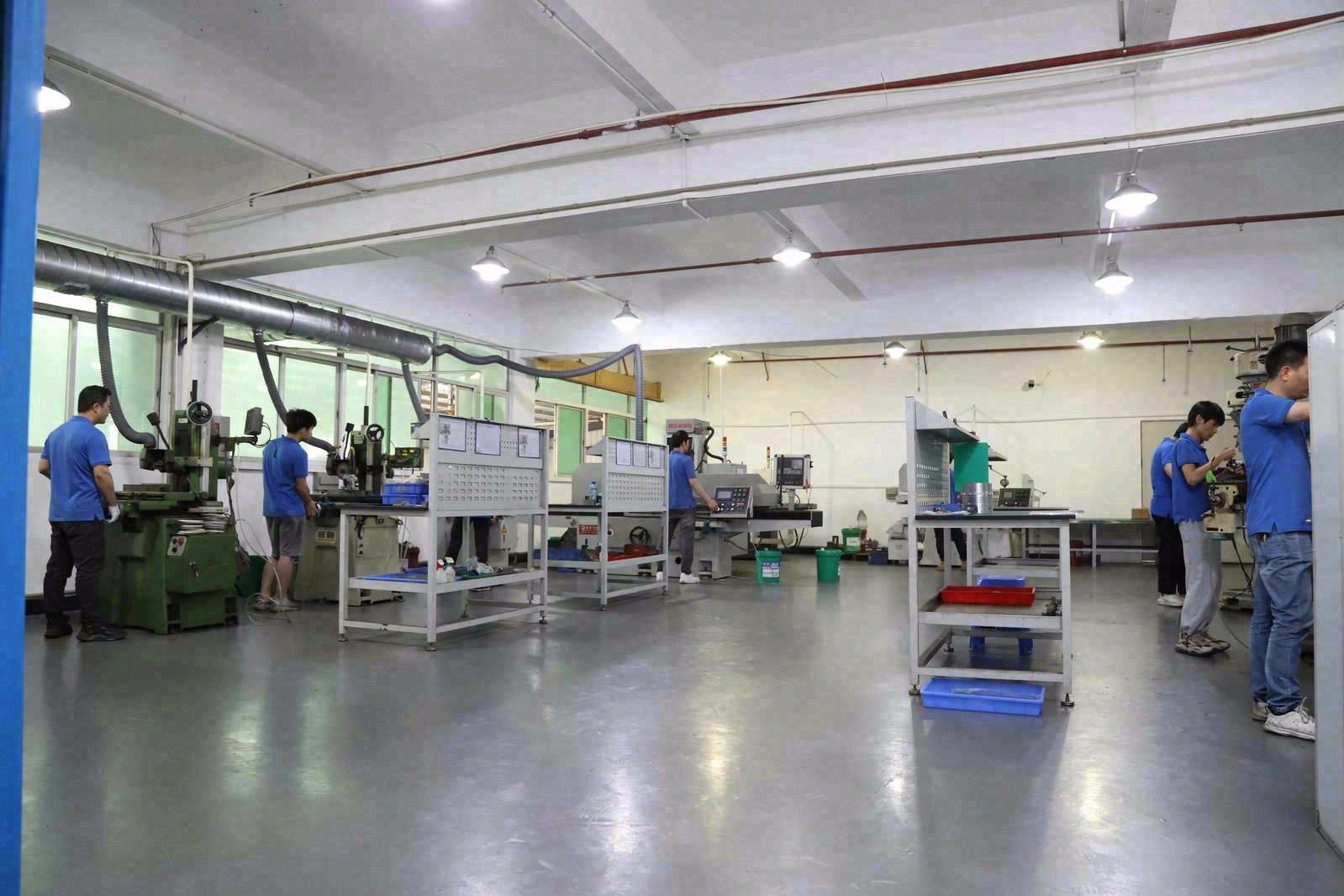
Every order for machined parts from China is a payment into a chain, and the chain has more links than the price suggests: the factory that cuts the metal, the trading company that answers your email, the export agent that books the freight, the inspection agency that checks the goods and the bank that moves the money. The risk is not that any one link is dishonest; it is that the links are not the same company, and the responsibilities blur where they meet. This guide follows the chain of custody of a Chinese machining order — from the entity that holds your contract to the factory that holds your metal to the inspection that protects your money — and shows what to verify at each handoff before the deposit is sent.
Why is the chain of custody the core question in China sourcing?
A part machined in China can travel through several hands before it reaches you, and each hand is a place where responsibility can leak. The entity that quotes you may be the factory, a trading company working for the factory, or a broker working for neither, and the difference decides who answers when the parts are late, wrong or lost. The entity that holds your contract may not be the entity that owns the machines, and the entity that owns the machines may not be the entity that inspects the parts before they ship. The audit of China sourcing is the audit of who is responsible at each link, because a chain whose links are all the same company has one throat to choke, and a chain of strangers has none.
The chain question also decides the economics. A direct factory price excludes the trading layer and its margin, but it also excludes the trading company's services — the English communication, the consolidation, the export handling, the problem-solving when the factory does not answer. A trading-company price includes those services and adds a layer. Neither is wrong; what is wrong is paying the trading price while believing you have the factory relationship, or vice versa. The buyer who knows which layer it is paying, and what that layer actually does, is the buyer whose money is buying the chain it thinks it is buying.
How do you verify who you are actually paying?
Ask the question directly and verify the answer: are you the factory, and if not, who is? A factory names its machines, its floor and its registration; a trading company names its suppliers, or refuses to. Ask for the registration details of the entity on your contract and compare them with the entity on your invoice and the bank account you are paying, because the mismatch between the name that quoted and the name that collects is the classic leak point. Ask whether the supplier will state, in writing, whether it owns the factory or represents it, and what happens to your order if the relationship between the two changes mid-order. A supplier that answers the ownership question plainly is a supplier whose chain you can map; one that answers with marketing is a chain with a hidden link.
Ask to see the factory behind the quote even if you are buying through a trader, because your quality ultimately lives on that floor. The trading company should be able to arrange a video walk of the factory that will machine your parts, name the machines your order will run on, and answer process questions about your part, or admit that the factory relationship is thin. A trader that cannot show the factory or answer the process questions is a trader whose value is confined to the paperwork, and your parts will be made by a factory that has never heard your name. The best trading relationships are transparent about the floor; the worst hide it, and the hiding is the signal.
What should you verify about the payment rails and the currency?
The payment mechanics of a Chinese order are part of its risk, and the audit should cover the rails, the currency and the timing. Ask how payment will be made: bank transfer, a letter of credit, a platform payment or a card, and which of those carry recourse if the order fails. Ask in which currency the price is quoted and how exchange-rate movement is handled between the quote and the invoice — a price quoted in yuan but invoiced in dollars months later has an exchange-rate story that belongs in the contract. Ask who bears the banking and transfer fees, which can be surprisingly large on international payments, and whether the quoted price is the price that arrives at the seller or the price that leaves your account. The money mechanics are not administration; they are part of the cost and part of the risk, and both belong in the pre-payment review.
Ask how the payment structure allocates risk across the chain. A deposit that covers material is reasonable; a payment schedule that releases against documented milestones — the first article accepted, the lot completed and inspected, the shipment documents issued — keeps the leverage with the buyer at every handoff. Ask what the supplier's standard terms are and which of them it will change, because the willingness to tie payment to evidence is the willingness to be accountable for the chain. A supplier that insists on full payment before production is asking you to fund a chain you have not yet verified; one that accepts evidence-based milestones is a chain that has learned to be accountable.
What should the contract say about inspection and the gate before shipping?
The inspection gate is where the chain of custody turns from promises into measurements, and the contract should name it explicitly. Ask where and when the parts will be inspected: at the factory before they leave, at a third-party agency's premises, at your destination, or not at all. Ask who performs the inspection and against what standard — your drawing, your inspection plan, or the supplier's own checklist — and what the report will contain. The strongest gate for an overseas order is a pre-shipment inspection at the factory by an independent agency, sampling the lot against your drawing before the container is sealed, because once the goods sail, every correction is a return trip. A supplier that agrees to a pre-shipment inspection is a supplier that is confident the parts will pass; one that resists it is a supplier that has a reason to want the container sealed before anyone looks closely.
Ask what the inspection report must show to release the balance and the shipment: the sampled dimensions against the drawing, the material certificate, the certificate of conformance and the lot traceability. And ask what happens when the inspection finds a failure — who decides the disposition, who pays for the rework and the re-inspection, and how the schedule is protected. The supplier that writes the failure path into the contract is a supplier that expects to be accountable for failures; one that has no failure path in the agreement is a supplier that will improvise one when the failure is yours to discover. The inspection gate is the chain's quality checkpoint, and it belongs in the contract before the deposit, not in the conversation after the failure.
How do you verify the certificates and the tolerance claims across the chain?
The certificates that travel with a Chinese machining order are the chain's documentation, and they should be verifiable rather than decorative. The quality baseline is ISO 9001:2015 for the quality management system of whoever actually machines the parts, with IATF 16949:2016 (product design excluded) and ISO 14001:2015 alongside where the work serves regulated industrial programs, and the certificate should be verified by number through the registrar, with its scope checked against the work you are buying. The tolerance claim should be equally concrete: ±0.003 mm on milled and turned features and ±0.002 mm on precision ground surfaces, with process capability of Ppk ≥ 1.67 at the initial study on key characteristics at volume. Ask which entity in the chain holds the certificates — the factory that machines or the trader that sells — because a certificate held by a trading company whose factory is unnamed is a certificate with no machine behind it.
Ask what material documentation ships with the parts: the mill certificate tied to the heat number actually machined, the certificate of conformance from the entity that machined, and any finish or treatment certificates the drawing requires. The material trace is the part of the chain that matters most if a question arises later, and it should be specified in the order rather than requested after the goods arrive. A supplier whose standard package includes the full material and inspection documentation is a supplier whose chain is documented end to end; one whose documentation must be extracted is a chain whose records are an afterthought.
What should you verify about quantity, minimums and the price curve?
The economics of a Chinese machining order run through quantity, and the audit should cover the price curve you are actually buying on. Ask how the price changes with quantity and where the minimum sits: a supplier that needs a large minimum to run your part is a supplier whose economics are built on volume, and a buyer ordering a small quantity through that supplier is paying for the volume it is not buying. Ask for the price at a few quantities and read the curve — the steep drop between small and medium quantities is the setup being amortized, and the flattening beyond that is the machine-time floor. A buyer who understands the curve knows which quantity tier it should order on and when it is paying a penalty for ordering below the supplier's efficient range.
Ask how the supplier handles the small order that is below its comfortable minimum, because the answer reveals its real interest in your business. A supplier that will run a small order at a sensible price, or that explains honestly why its minimum exists, is a supplier worth building a relationship with; one that either refuses small work or prices it as a penalty is a supplier whose business model does not include you at your current volume. The quantity conversation is the start of the relationship, and the supplier's behavior at your quantity — now and as the volume grows — is the behavior the relationship will follow.
How should intellectual property be handled in the chain?
For many buyers of Chinese machined parts, the drawing is the asset, and the chain of custody includes the drawing's custody. Ask who in the chain sees your files, how the files are stored and who can access them, and what the supplier's policy is on using your design for other customers. Ask whether the supplier will sign a confidentiality agreement and what the agreement actually covers — the geometry, the material spec, the sourcing, the pricing — because a vague NDA covers nothing. Ask how your files are handled when the order ends: are they deleted, retained, or kept in the supplier's library for the next time you order? A supplier with a clear IP policy is a supplier that has thought about your asset; one with no policy has not, and your drawing will be the first test of its discipline.
The IP question also runs through the tooling and the fixtures. If your part needs dedicated tooling or fixtures, ask who owns them, where they are stored between orders and what happens if you change suppliers — the fixture that your deposit paid for should be yours to recover or to authorize for reuse. And ask how the supplier handles a customer request to quote the same part to a competitor, because the answer reveals whether the supplier treats your design as yours. The drawing is the beginning of the chain of custody, and its protection is part of what the deposit should buy.
Which findings should end a China sourcing conversation before payment?
End it when the ownership question produces evasion, because a chain that will not name its factory is a chain you cannot audit. Stop when the payment entity does not match the contracting entity, because the money is then leaving your control to a name you did not agree with. Walk away when the pre-shipment inspection is refused, when the certificates cannot be verified by number and scope, when the material documentation is not part of the standard package, and when the IP policy does not exist. And treat a supplier that insists on full prepayment, or that cannot state who will inspect the parts before they sail, as a supplier that has designed its terms around its own convenience rather than around your protection.
Run the chain test with a first order sized to be survivable: a modest quantity with real tolerances, a pre-shipment inspection in the contract, payment milestones tied to evidence, and your questions asked plainly. Watch whether the entity that quoted answers when the parts are late, whether the factory the trader named is the factory the parts come from, whether the inspection finds what the report claims, and whether the money moved the way the terms promised. If the chain holds, the next order can grow with confidence; if a link breaks, you have learned which one at the smallest scale the chain allows, and the next sourcing decision is made with the map the audit gave you.
Frequently Asked Questions
Should I buy direct from the factory or through a trading company?
Direct buying excludes the trading margin but also its services; buying through a trader pays for communication, consolidation and problem-solving. Neither is wrong — what is wrong is paying for one while believing you have the other. Verify which layer you are paying and what it actually does.
How do I verify who I am paying in China?
Ask directly whether the supplier owns the factory, and compare the registration on the contract, the invoice and the bank account. Mismatches between the name that quoted and the name that collects are the classic leak point in the chain.
What payment methods protect me on a Chinese machining order?
Methods with recourse — letters of credit or platform payments with dispute processes — preserve options that a direct bank transfer does not. Tie the payment schedule to evidence: first article accepted, lot inspected, shipment documents issued.
What is a pre-shipment inspection and why does it matter?
An independent agency samples the finished lot at the factory against your drawing before the container sails. Once the goods are on the water, every correction is a return trip, so the inspection before shipment is the strongest gate the contract can set.
What tolerance and certificates should a Chinese supplier state?
±0.003 mm on milled and turned features and ±0.002 mm on precision ground surfaces, with Ppk ≥ 1.67 at the initial study on key characteristics and Cpk ≥ 1.33 on general characteristics. Capability is reported per characteristic: every report names the feature, its tolerance band, the sample size, the sigma method, and the study window. ISO 9001:2015 as the baseline, verifiable by number through the registrar, held by whoever actually machines the parts.
How should my drawings be protected in the chain?
Ask who sees the files, how they are stored, whether the supplier will sign a confidentiality agreement that covers the geometry and the spec, and how the files are handled when the order ends. Your drawing is the beginning of the chain's custody.
What does a first order test in the China sourcing chain?
Who answers when the parts are late, whether the factory named is the factory that delivers, whether inspection matches the report and whether payment behavior follows the terms. A first order sized to be survivable maps the whole chain at the smallest scale.
Want the chain of custody on paper before you pay?
Ask for the ownership statement, the certificate numbers and the inspection gate in writing through [email protected] or +86 13126536955. See the quality page for the inspection framework and the factory page for the floor your parts would run on.