
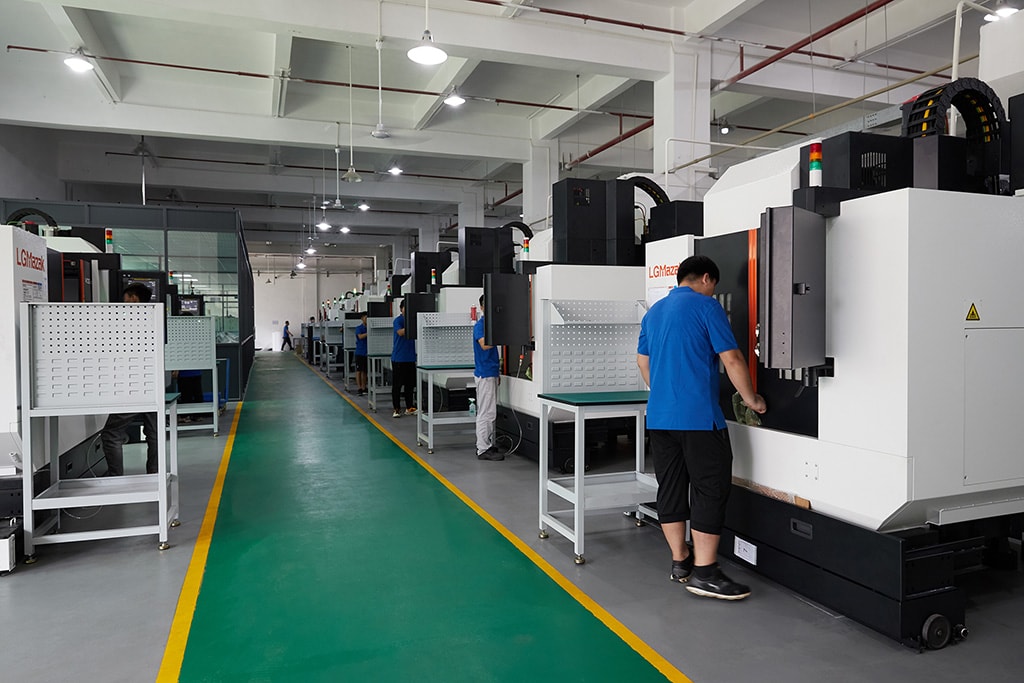
The price of having parts machined in China is built the way a quotation is built: material, process, quantity, finishing, and terms stacked on top of one another. Buyers who ask "what does it cost?" and receive a unit price have been given a total with no anatomy, and a total without anatomy is impossible to negotiate, to compare, or to trust. The realistic way to think about the cost of machined-in-China parts is as a set of dials — some controlled by the drawing, some by the quantity, some by the specification, and some by the terms of the deal. This guide explains each dial and shows how to turn them so the price you pay matches the part you actually need.
- Cost is a set of dials: geometry, material, tolerance, quantity, finishing, and freight each move the price in ways a unit price never shows.
- The drawing sets the floor: material grade and tolerance callouts decide the process class, and the process class decides the price.
- Quantity does the heavy lifting: setup and programming are fixed costs that small orders carry whole and large orders spread thin.
- Terms are money: incoterm, documentation, and payment structure belong in the price comparison, not after it.
What are the dials that actually set a machined-part price?
A machined-in-China price responds to a small set of inputs, and knowing which input is doing the work makes the quote readable. The geometry decides the process: a simple prismatic shape machines cheaply, a complex one with tight internal features does not. The material sets the base cost of the stock. The tolerance callouts decide whether the part stays in one process class or visits a second. The quantity spreads or concentrates the fixed costs. The finishing specification adds a vendor. The terms add the freight and the documentation.
Each dial has a different owner. Geometry and tolerance belong to the designer. Material belongs to whoever chose the alloy. Quantity and terms belong to the buyer. Finishing belongs to whoever wrote the surface spec. The quote is the meeting point of all those decisions, and the buyer who understands which dial is driving a high price knows which decision to revisit — a cheaper alloy, a looser tolerance on a cosmetic feature, a larger order, a different finish, a longer freight window.
Ask the factory to break the quote into its dials rather than hand you a lump sum. When the material line, the process line, the finishing line, and the freight term are visible, the price has a conversation inside it. When the quote is a single number, the conversation happens later — usually at the first article, when the missing line items announce themselves.
How much does the material choice decide the final price?
Material is usually the first dial to move a price, because the alloy sets the cost of everything that follows. A commodity grade of aluminum or steel prices one way; a specialty stainless, a titanium alloy, or an engineering plastic prices very differently. The difference is not only the stock cost — it is the machining behavior, the tool wear, the cycle time, and the scrap rate, all of which flow from the alloy into the process line.
The size and form of the stock matter almost as much as the grade. Machining parts out of bar, plate, or billet leaves scrap behind, and the buyer pays for the stock the part was cut from, not the volume the part occupies. A part that nests efficiently in a standard bar wastes little; a part cut from a thick plate wastes a lot, and the waste is in the quote. The material line is the price of the stock, the waste, and the handling, not the price of the alloy per kilogram.
Certification adds a further step on the material dial. Material that must arrive with a certificate tying it to its heat carries procurement and verification costs that commodity stock does not. The certificate is not optional in regulated industries, so the requirement should be on the RFQ and the cost should be visible in the quote. A material conversation at the start of the process is the cheapest way to control the largest line in the price.
Why does tolerance move the price more than the geometry does?
Geometry decides how a part is made; tolerance decides which process class makes it. A feature held at ±0.003 mm is ordinary work for a controlled shop — the same process, the same machine, the same inspection as general machining. A feature held at ±0.002 mm changes the class: it needs grinding, which is a second machine, a second setup, a slower process, and a deeper measurement routine. The price jumps when the part crosses a process boundary, not when the dimension shrinks smoothly.
Capability evidence is the second engine of the tolerance line. When the drawing or the quality system requires Ppk ≥ 1.67 at the initial study on key characteristics and Cpk ≥ 1.33 on general characteristics. Capability is reported per characteristic: every report names the feature, its tolerance band, the sample size, the sigma method, and the study window., the factory must generate the data — samples, measurements, and analysis — and the data costs instrument time and engineering attention. A part quoted with capability evidence is priced for proof; a part quoted without it is priced for hope, and the difference shows up the first time the evidence is requested.
The tolerance dial is the one designers control most directly and use least deliberately. Tighten the features that function — the mating diameter, the seal face, the datum structure — and leave the rest at the general tolerance. Every feature pushed past the process boundary carries the grinding-class price even when the part does not need it. A drawing that spends its tolerance budget where the function spends it gets the function at the ordinary-process price.
How do quantity and setup arithmetic set the unit price?
The unit price of a machined part falls as the quantity rises, and the reason is arithmetic rather than generosity. Programming, tooling, and setup are fixed costs: they happen once per part number regardless of the run size, and they spread across every unit in the order. A run of fifty parts carries the full fixed cost per part; a run of five thousand carries a fiftieth of it. The falling unit price is the fixed cost being diluted, not the factory getting more efficient at the margin.
The quantity dial has a shape worth knowing. It falls steeply at first — the difference between ten and a hundred parts is dramatic — and flattens as the fixed costs become negligible against the variable cost of material and machine time. Beyond a certain quantity, the unit price stops falling because the part has reached its material-plus-machine-time floor, and the only remaining savings come from process efficiency rather than volume.
Ask for a price curve rather than a single price. A factory that quotes at three quantities — the pilot, the production batch, and the annual volume — is showing you how its fixed costs spread and where its floor sits. The buyers who negotiate well on machined-in-China parts are the ones who buy the quantity that sits at the knee of the curve: large enough to dilute the setup, small enough to avoid holding inventory the design will soon outgrow.
What do finishing and surface treatment add to the price, and when are they worth it?
Finishing is a separate purchase sitting inside the machining quote. Anodizing, plating, passivation, and heat treatment run through specialist vendors, and each adds its own process cost, its handling, and its margin. The finish also interacts with the machining — an anodize grows dimensions, plating adds thickness, and the machining has to leave room for the coating — which means the finishing decision reaches back into the process line and the tolerance line.
Each finish carries a different price signature. Clear anodize is the inexpensive end; hard anodize and colored Class II coatings cost more. Passivation is cheap but must be specified and verified. Plating prices by thickness and area. Heat treatment prices by the cycle. The cheapest finish that meets the specification is a real saving, and the most expensive finish that nobody specified is a real waste — both are decided by one line on the drawing.
Ask which finish the drawing actually requires and which finish the quote assumes. A quote priced for as-machined parts that carries an anodize callout is a quote that will move at first article. A drawing that names the finish standard and the quote that prices it are a pair that survives the order. The finish dial is easy to turn late and expensive to turn late, so it belongs in the RFQ rather than at the first article.
Where do inspection and documentation sit in the cost of a China order?
Every serious machining order carries inspection cost, and the size of the line depends on the evidence the drawing and the quality system demand. A dimensional check on the critical features is built into any responsible quote. A first-article report measured against the drawing's datum structure adds CMM time and a document. Capability data, surface verification, and material certification each add instrument time and paperwork. The documentation line grows with the request, and the request is yours to make.
The documentation line is where the true cost of a low quote appears. A factory pricing far below its peers has usually trimmed the inspection scope, the certificate, or the report package, and the trim surfaces at your incoming inspection, when the parts arrive without the evidence your system needs. A rejected lot, a re-inspection, and a delay cost more than the certificate ever would have, which makes the documentation line the cheapest insurance in the order.
State the full documentation requirement when you request the quote and compare prices that include it. The quality page on this site lists the inspection instruments behind our reports and the documentation that ships with each lot — the standard a buyer should hold any machined-in-China quote to. A price that includes the proof is a price; a price that omits it is a deposit on a larger bill.
How do freight terms and payment structure change the real price?
The price on the quote and the price you pay are separated by the terms. A quote on an EXW basis stops at the factory gate, and the freight, insurance, and handling to your door are added on top. A quote on a delivered basis includes them. Two factories can quote the same parts at prices that differ mostly by freight risk wearing different incoterms, and the buyer who compares totals without comparing terms is comparing different offers.
The payment structure carries a quieter cost that rarely appears in the comparison. A factory that wants most of the money before any inspection evidence transfers risk to you, and transferred risk is a cost whether it is itemized or not. A schedule that ties payments to verifiable events — order placed, first article approved, pre-shipment inspection passed — prices the order rather than pricing the buyer's patience. The supplier who resists the schedule is asking you to pay for its trust in itself.
Read the total as the price plus the terms. State the incoterm you want in the RFQ so quotes compare on the same freight basis, and weigh the payment schedule as part of the price. The buyers who pay the least for machined-in-China parts are rarely the ones with the lowest unit price; they are the ones who bought the complete quote — material, process, proof, finish, and terms — at the quantity that diluted the setup.
How do you build an RFQ that produces comparable, honest prices?
The price you receive is a response to the RFQ you send, and a complete RFQ is the cheapest tool in the buying process. Send the toleranced drawing with datums and finishes, the material grade and condition, the quantity or the quantity ladder, the general tolerance standard, the documentation you require, and the incoterm you will buy on. Each element removes a degree of freedom from the quote, and each removed freedom makes the prices comparable.
Ask every factory to quote in the same shape: unit price by quantity, material basis named, process chain stated, inspection and documentation listed, finishing and freight terms explicit. The factories that answer in that shape are pricing real work; the ones that return a single number are leaving the rest of the quote for you to discover. The difference between the two responses is not formatting — it is whether the factory has actually read your drawing and planned your process.
Then weigh the quotes on the whole cost rather than the unit price. A slightly higher price from a factory that holds its tolerances, ships its documentation, and keeps its schedule is cheaper than a low price from one that discovers its assumptions at the first article. The real price of machined-in-China parts is the complete quote — all the dials set to what the drawing actually requires — and the buyer who compares complete quotes gets the part at the price it genuinely costs to make.
Frequently Asked Questions
What drives the price of machined-in-China parts more than anything?
The process class, which is set by the geometry and the tolerance callouts. A part inside the standard envelope — ±0.003 mm machining with ordinary inspection — prices as normal work; a feature at ±0.002 mm adds grinding, and capability evidence at Ppk ≥ 1.67 initial adds proof. Material, quantity, finishing, and terms set the rest.
Why is my unit price so different at different quantities?
Because programming, tooling, and setup are fixed costs that spread across the run. Small orders carry them whole; large orders dilute them. The unit price falls steeply at first and flattens at the material-plus-machine-time floor, so ask for a price curve rather than a single number.
How much does the material choice change the machining price?
Material is usually the largest line. The grade sets the base, the stock form decides the waste you pay for, and certification adds procurement and verification cost. Name the grade and certificate basis at the RFQ so the largest line in the quote is a fact rather than a guess.
Do tight tolerances always make a part more expensive?
Only when they cross a process boundary. ±0.003 mm is ordinary work; ±0.002 mm needs grinding — a second machine, setup, and inspection. Tighten the functional features and leave the rest at general tolerance, and the part stays at the one-process price.
Why does the first order cost more than the repeats?
Because the first order carries the fixed costs of starting — programming, tooling, engineering, and first-article proof. Ask for the repeat price once the program exists, and buy the quantity that sits at the knee of the price curve rather than holding inventory the design will outgrow.
How much do finishing and documentation add to a China machining price?
Finishing runs through partner vendors with their own costs, and documentation grows with the evidence requested. Both are real lines that belong in the quote. State the finish standard and the full documentation requirement at the RFQ, because a missing certificate or an assumed finish costs more than either ever costs to include.
Is the cheapest machined-in-China quote ever actually the cheapest?
Only when the assumptions match. Compare quotes on the same material basis, process chain, inspection package, finishing steps, and incoterm — then the lowest complete quote is the real bargain. A low quote with thinner assumptions is the first installment of a larger bill.